Is Misool good for underwater photography?
Yes, and for a specific reason. Most reef destinations favor one discipline. Misool’s southern circuit puts a manta cleaning station, soft-coral pinnacles and pygmy-seahorse fans within the same week, so a photographer carries two rigs and uses both.
The second reason is the water. In the October to April season, visibility typically runs 25–35 m, and the surface sits at about 27–30°C, which means long, comfortable bottom times without a thick suit getting in the way of a dome port. The karst itself is the third reason: arches, swim-throughs and shallow walls give wide-angle shooters structure to work with, not just blue.
The honest caveat is current. Magic Mountain and Four Kings are moderate-to-strong sites and the manta action depends on tide. A photography trip in Misool is planned around slack windows, which is why a yacht with an experienced dive team matters more here than in a sheltered bay.
Misool marine life checklist by lens
Pack by subject, not by habit. The list below is what photographers reliably work in Misool, split by the lens that earns the frame.
Wide-angle subjects
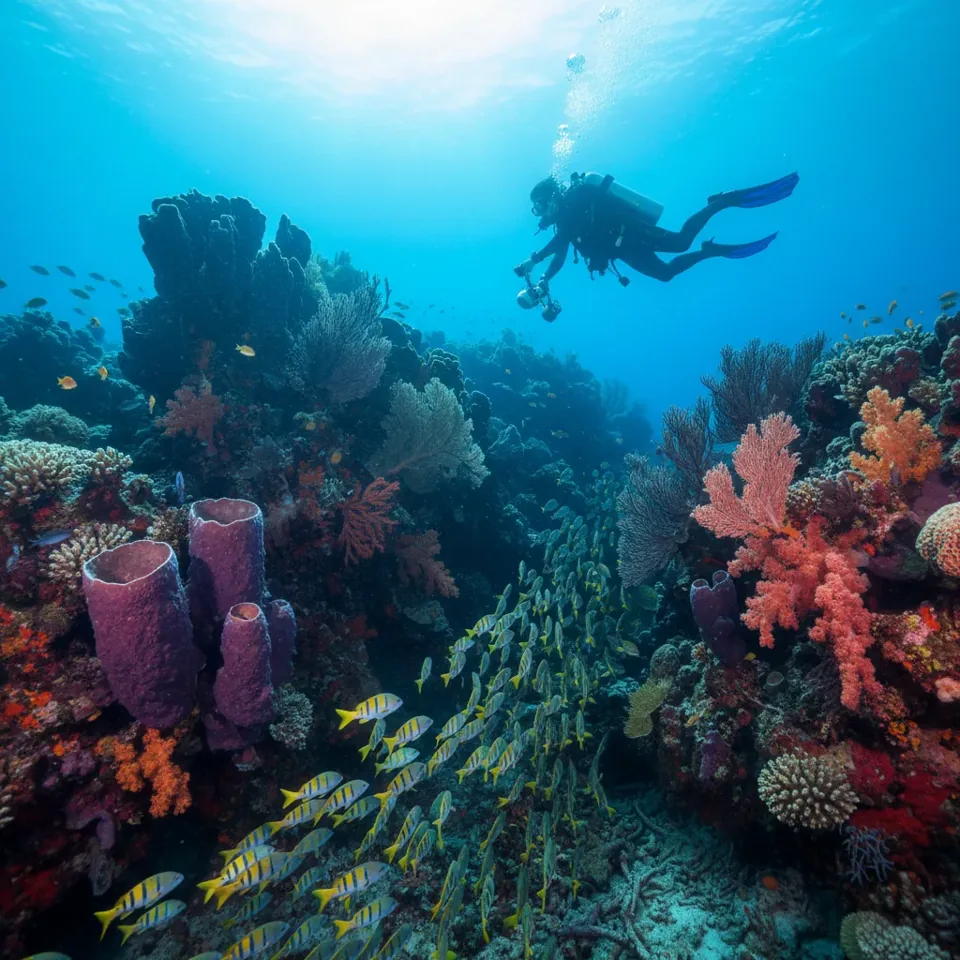
- Reef and oceanic manta rays at the Magic Mountain cleaning station, strongest December to March, with January and February the usual peak.
- Reef sharks, blacktips among them, patrolling the pinnacle drop-offs, with trevally schooling above.
- Soft-coral walls and sea fans at Four Kings and Fiabacet, where the color saturates under strobes.
- The twin limestone arches of Boo Windows, shot from inside looking out toward the sun, at 5–30 m.
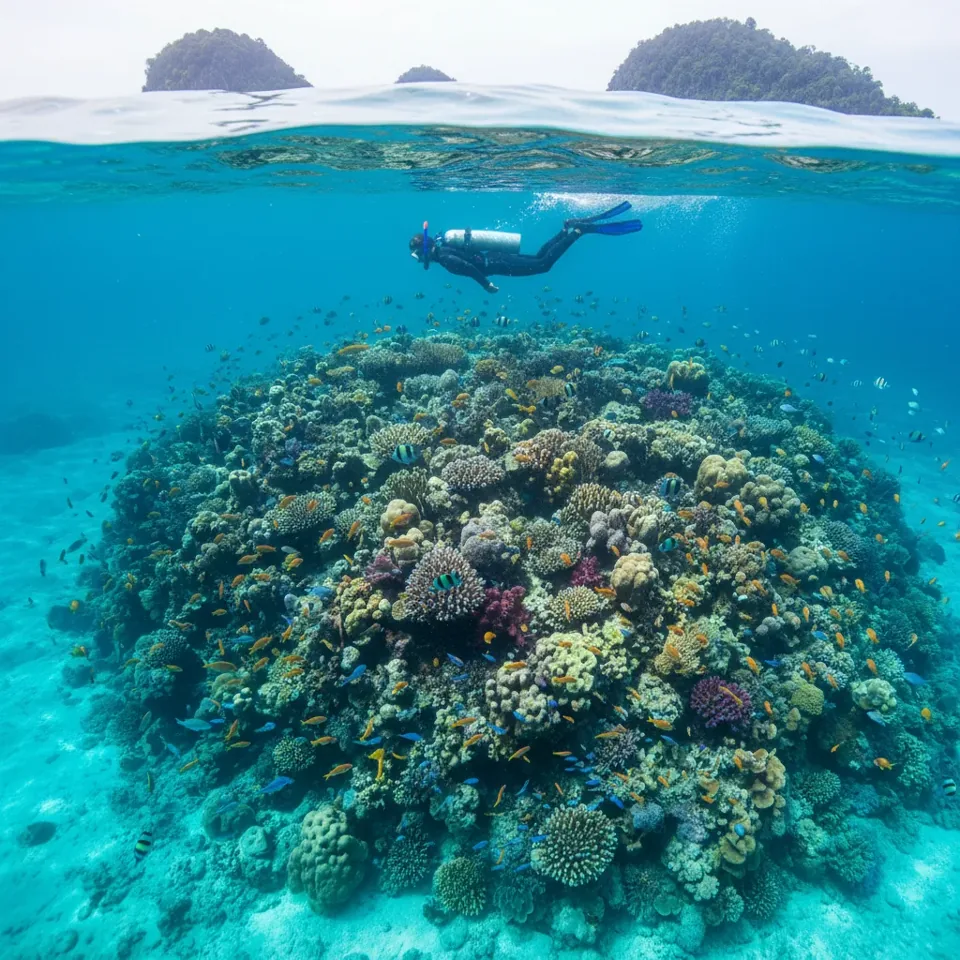
- Turtles over the shallow hard-coral gardens at Daram, 3–18 m.
- Barrel-sponge gardens and schooling trevally at Wayilbatan, 5–35 m.
Macro subjects
- Bargibant’s pygmy seahorse on Muricella gorgonians and Denise’s pygmy seahorse on smaller fans, mostly at Fiabacet.
- Tasselled wobbegong sharks resting under ledges, a portrait subject because the face is the frame.
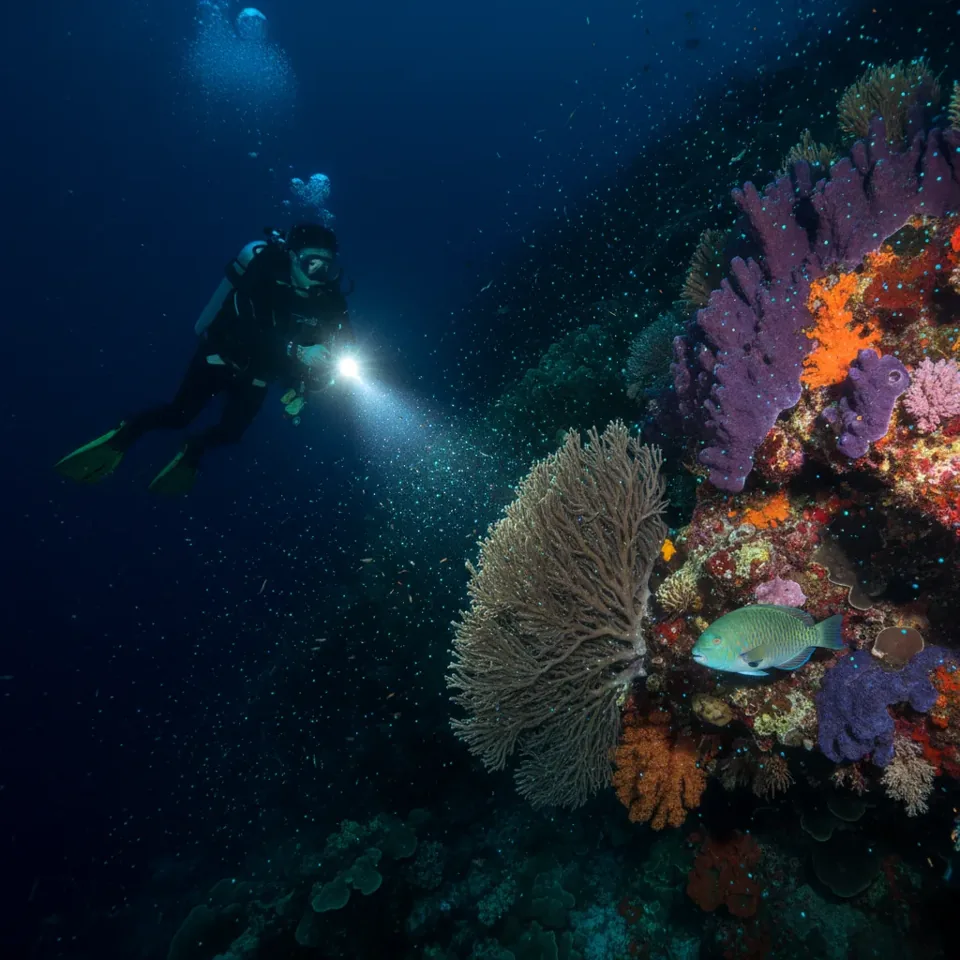
- The epaulette or walking shark, found on shallow reef after dark and usually photographed on night dives with a focus light.
- Nudibranchs, frogfish and ghost pipefish at Nudi Rock, 5–20 m, a usually calm macro site.
- Hard-coral detail and reef-fish portraits at Daram and Yilliet.
A note on walking sharks. Raja Ampat’s epaulette shark is a shallow, nocturnal reef species. Expect to find it by searching rubble and hard coral at dusk and after dark, not on a pinnacle at 30 m. Ask the dive team to schedule at least two night dives, and tell them before the trip that the walking shark is on your list.
Which Misool dive sites are best for photographers
The sites below cover the standard southern Misool circuit. Depths are planning figures from published site guides; your guide sets the actual profile on the day, and current on every one of them changes with the tide.
| Site | Depth | Lens | What you shoot | Current |
|---|---|---|---|---|
| Magic Mountain | 7–40 m | Wide-angle | Reef and oceanic mantas, sharks, trevally | Moderate to strong, advanced |
| Boo Windows | 5–30 m | Wide-angle | Twin arches, soft corals, schooling fish | Moderate to strong, slack tide best |
| Four Kings | 5–40 m | Wide-angle | Four soft-coral pinnacles, dense schools, pelagics | Moderate to strong, cross-currents |
| Fiabacet | 8–35 m | Both | Sea fans, pygmy seahorses, wobbegongs, sweetlips | Moderate, tide-dependent |
| Wayilbatan | 5–35 m | Wide-angle | Barrel sponges, schooling trevally | Rises with the tide |
| Nudi Rock | 5–20 m | Macro | Nudibranchs, frogfish, ghost pipefish | Usually calm |
| Daram | 3–18 m | Both | Hard-coral gardens, turtles | Protected |
Three notes for planning. Fiabacet is the one site to dive twice, once with each lens. Boo Windows is a slack-tide site; the arch shot needs still water and a diver placed in the window. Magic Mountain’s mantas come to be cleaned, so the frame is made by waiting at the station, not by swimming after the animal. The full circuit is mapped on our Misool dive sites guide.
Season for visibility and light
Misool’s operating season by yacht is October through April. The most reliable conditions are November to March, and January to February is usually the best all-around window for calm crossings, visibility and mantas. October and April are transitional; October usually improves through the month, while late April can see the southeast monsoon start and seas deteriorate.
Visibility in the better months runs 25–35 m, against a typical 20–30 m overall and roughly 10–15 m in the rougher May to September period. For wide-angle work that difference decides whether the second arch at Boo Windows is in the frame. Water temperature is about 27–30°C through the season, so a thin suit is enough for most photographers on three to four dives a day.
Light is a matter of hour, not month. The limestone sites face different directions, so the dive team positions the yacht to put the sun behind the arches mid-morning and over the pinnacles at midday when the soft coral needs fill. Our Misool manta season post covers the cleaning-station calendar, and the best-time guide sets the trip in the wider Raja Ampat year.
Liveaboards with camera rooms and photography workshops
A photography liveaboard is defined by four things. A dedicated camera room with individual charging stations and padded benches. Separate fresh-water rinse tanks for housings, kept apart from the general gear rinse. Nitrox, for longer bottom times in the mid-depth band where most subjects sit. And a dive team who understand that a photographer wants to stay with one gorgonian for the whole dive.
Several dive-led vessels working Misool, including Dewi Nusantara, Damai and Blue Manta, are marketed to photographers on those terms. Confirm the current camera-room layout and nitrox policy with the desk before you commit, because configurations change between seasons and not every departure carries the same crew.
Workshops are a separate question. Some vessels run scheduled photographer-led departures with daily image reviews and lighting sessions; others simply provide the room and the time. If a workshop matters, say so when you enquire. The desk matches departures with a pro on board and tells you plainly when a given week is a standard dive trip.
Shared-cabin photography trips on luxury liveaboards run about USD 350–900 per person per night in 2026, with premium vessels above that. For a seven-night trip, plan on roughly USD 3,500–8,400 per person before flights and extras such as nitrox or rental gear. The Misool luxury liveaboard page lists the vessels and what each includes, and the permit and fee guide covers the conservation card.
Private photography charters and astrophotography from the deck
For a group of photographers, a private charter removes the one friction a shared trip cannot: the dive schedule. The yacht is yours, so you dive Fiabacet at slack tide twice in a day, hold Magic Mountain for the manta window, and run a third night dive for walking sharks without negotiating with non-photographers.
Private charters in Misool are priced per yacht, per night, from USD 6,400 to USD 35,000 depending on the vessel, plus 11% VAT, with a 7-night minimum from Sorong. To make that concrete: seven nights on a ten-guest phinisi at the entry rate is USD 44,800 for the whole yacht, about USD 640 per guest per night. The Misool luxury yacht charter page explains the tiers, and the Misool luxury diving page shows how a private dive week is paced. Photographers who want Misool and a second region in one trip look at the 12–14 night Misool luxury expedition, which links the reserve with the Banda Sea or Triton Bay.
A private charter also opens the deck after dark. Misool sits far from any city, and on a clear, moonless night the sky over the karst has little light pollution. Anchored in a lagoon with the generators quiet, the foredeck becomes a stable platform for a tripod. Ask the captain for a mooring with an open southern horizon and for the deck lights to be dimmed after dinner.
Pack for both. A fast wide lens for the sky, a tripod that does not mind salt, and the same housing you use by day. The Misool packing guide covers batteries, spares and what cabin baggage allows; the getting-there guide covers the flight and the night in a hotel in Sorong before departure.
Plan it
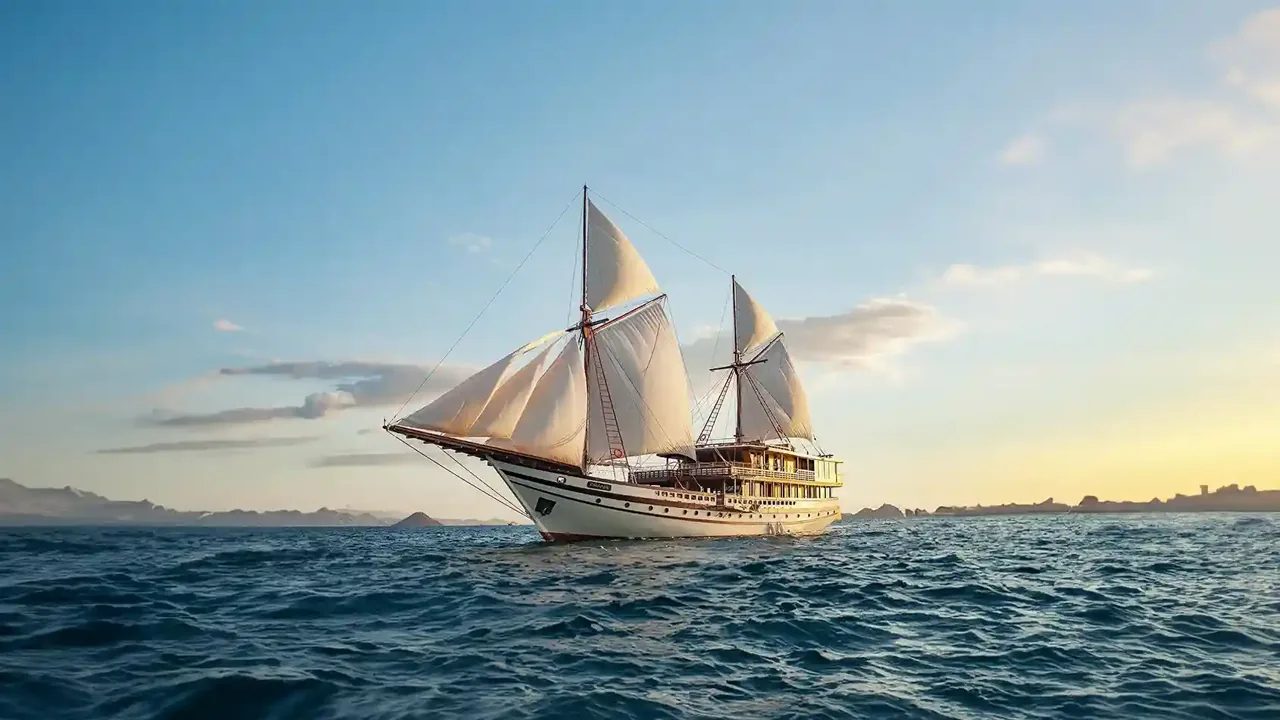
Tell the desk your dates, your lens kit and whether you want a photographer-led departure or simply a camera room and nitrox. We check which liveaboards have Misool on the itinerary in your window, whether the camera room is confirmed for that season, and how many night dives the schedule allows. You receive a written per-person comparison with cabin class, nitrox and park fees on separate lines, and a private-charter total if your group is large enough to make the whole yacht sensible. Start with the Misool luxury liveaboard page; the Coralia below is one of the shared-cabin vessels we place photographers on.
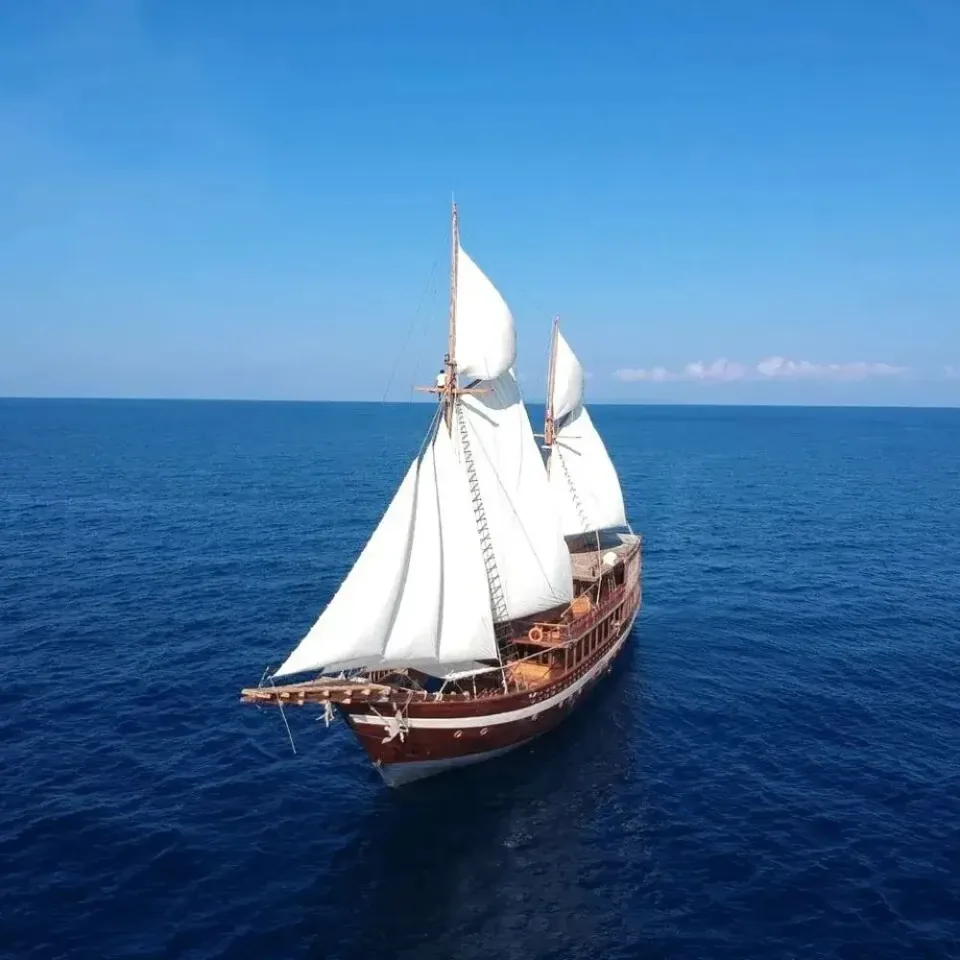
Coralia
48 m traditional phinisi · 8 cabins · 16 guests
From USD 780 per person per night, shared cabin.
Which Misool dive sites are best for photographers?
Fiabacet for both lenses, Magic Mountain and Four Kings for wide-angle, Nudi Rock for macro, and Boo Windows for the arch shot at slack tide. Daram’s shallow hard-coral gardens at 3–18 m suit turtles and snorkel-depth work. Most seven-night Misool itineraries reach most of these; ask for Fiabacet twice.
Where are the best manta dive sites in Misool?
Magic Mountain, sometimes listed as Shadow Reef, is the main cleaning station at 7–40 m and is visited by both reef and oceanic mantas. The strongest period is December to March, with January and February the usual peak. It is an exposed, current-affected site, so the dive is timed to the tide and planned as an advanced dive.
Where can you see pygmy seahorses and walking sharks in Misool?
Bargibant’s and Denise’s pygmy seahorses live on gorgonian fans at Fiabacet and on fan-covered walls elsewhere in the south; your guide knows which fans. The epaulette or walking shark is a shallow nocturnal species found on reef flats and rubble on night dives. Neither is found by swimming; both are found by stopping and looking.
What lens is best for Misool diving?
Both, and the trip is planned so that you use both. A fisheye or rectilinear wide-angle behind a dome port for mantas, arches and soft-coral pinnacles; a 60 mm or 100 mm macro for pygmy seahorses, wobbegong portraits and nudibranchs. If you must carry one rig, wide-angle covers more of Misool’s signature frames.
Are there photography workshops on Misool liveaboards?
Some departures are photographer-led, with image reviews and lighting sessions between dives; others provide a camera room, rinse tanks and nitrox without instruction. Workshop weeks are scheduled by the vessel, not run year-round. Tell the desk a workshop matters and we confirm whether your dates fall on one before you commit to a cabin.
How much does a Misool photography liveaboard cost?
Shared-cabin luxury liveaboards run about USD 350–900 per person per night in 2026, with premium vessels higher. A seven-night trip is roughly USD 3,500–8,400 per person before flights, nitrox, rental gear and park fees. A private photography charter starts at USD 6,400 per yacht, per night plus 11% VAT, with a 7-night minimum.
Send the desk your dates and your lens kit and we will return a Misool photography itinerary with the camera room, nitrox and night dives confirmed in writing. WhatsApp +62 811-3941-4563 or email [email protected].