Where Misool is, and how it differs from the rest of Raja Ampat
Raja Ampat means “four kings”, and the four are Waigeo, Batanta, Salawati and Misool. The first three cluster around the Dampier Strait, within a few hours of Sorong by speedboat. Misool sits apart, across open water to the south, which is why most short Raja Ampat trips never reach it. On a map it is the large island at the bottom of the group, fringed to its east and south by hundreds of smaller limestone islets.
That separation is the point. The crossing from Sorong to central Misool runs 90 to 110 nautical miles, which at 8 to 10 knots is roughly 10 to 14 hours underway, so it is normally sailed overnight. There is no airport on the island. A yacht that leaves Sorong after dinner wakes you among the karst the next morning.
The water around southern Misool is also different in character from the Dampier Strait. The current-swept passes near Waigeo bring fish in walls; Misool brings soft coral, limestone and quiet lagoons, with mantas on the exposed seamounts.
Misool at a glance
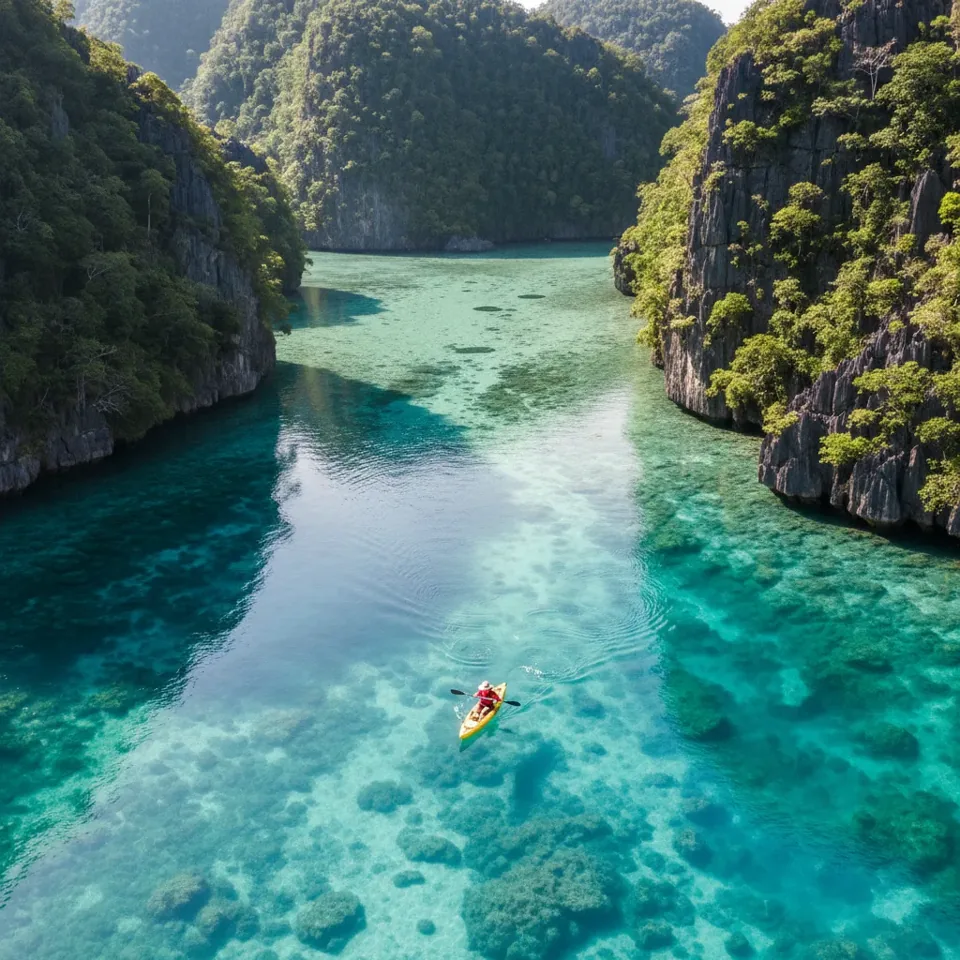
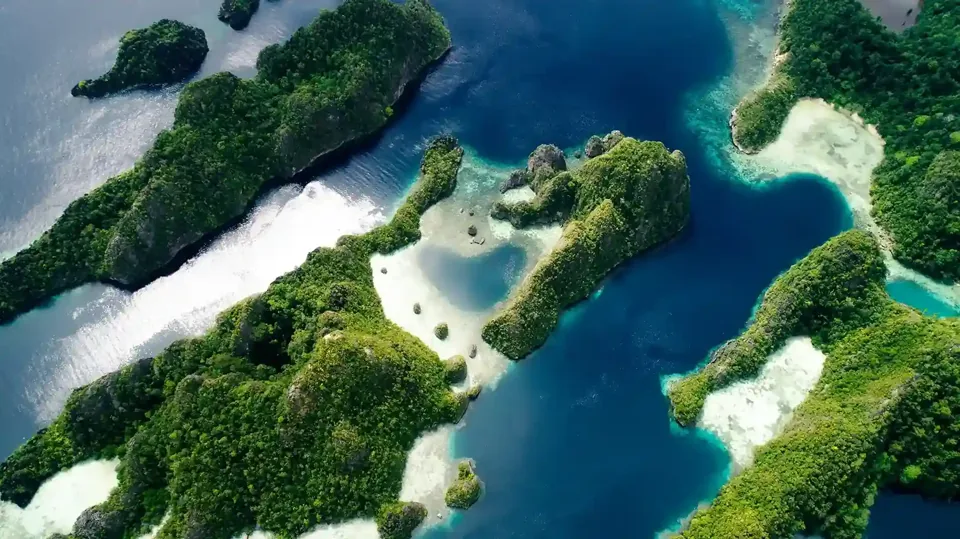
Misool’s landscape is karst: limestone islands worn by rain into mushroom shapes, undercut at the waterline and capped with forest. Between them lie lagoons so enclosed that the water turns milky turquoise over white sand. The eastern and southern fringes are where the islets are densest, and they are where a charter spends most of its days.
Much of that water is protected. The Misool Marine Reserve covers about 1,220 km2 and contains two no-take zones plus a restricted-gear blue-water corridor. Fishing, spearfishing, netting and collecting of any kind are banned inside the no-take zones, and a local ranger patrol of about 18 people operates from three stations with five boats. The wider government-managed Misool Islands protected area is larger still, at about 3,450 km2. Our guide to the Misool marine reserve rules for yacht guests covers mooring, anchoring and conduct in detail.
People live here too. Yellu, Fafanlap and Harapan Jaya are the main villages of southern Misool. Misool was also one of the four historic kingdoms that give Raja Ampat its name, and sasi, the customary closure of reefs, predates the modern reserve.
The 12 places worth sailing for
These are the stops that justify the overnight passage. All are reached from the yacht by tender; none has a jetty or a road.
- Balbulol. A field of karst islets and reef in southern Misool, visited for the limestone formations, the lagoon and the diving around it. Tender access only, and the anchorage depends on tide and weather. See Balbulol lagoon by tender.
- Wayil, or Love Lagoon. A sheltered turquoise lagoon inside a ring of limestone, named for its heart shape from the viewpoint above. Yachts anchor outside and guests go in by tender. See Love Lagoon from the viewpoint.
- Harfat Jaya, or Puncak Harfat. A hilltop viewpoint over the karst and lagoons. The climb is steep and uneven, done with a local guide in the early morning before the heat. See the Harfat Jaya climb.
- Tomolol Cave. Prehistoric red rock art, hand stencils and figures, on the walls of a sea cave approached by tender. Age estimates vary widely between sources, so treat any single figure with caution. Do not touch the paintings. See Tomolol cave art.
- Lenmakana jellyfish lake. A saltwater lake of largely stingless Mastigias jellyfish, reached by a short hike from the shore. Surface snorkeling only, no fins, no scuba, no sunscreen or repellent in the water. See the jellyfish lake rules.
- Yapap. A cluster of striking limestone rocks and islets for scenery, snorkeling and photography, with small beaches and shallow reef reached by tender.
- Kalig. A white-sand island stop for a picnic lunch, often paired with diving at nearby Fiabacet.
- Dapunlol. A small karst and lagoon area in the island group, approached by expedition yacht and tender. Public information on it is thin.
- Fiabacet. A pinnacle chain and island area that is primarily a dive destination, described below.
- Farondi. Limestone walls, caves and soft coral, with exposure and current that vary by site and tide.
- Daram. Shallow hard-coral gardens at 3 to 18 m, turtle habitat, and the easiest snorkeling in Misool.
- Magic Mountain. The manta seamount, the reason many divers come at all, and covered in the next section.
Our page on the lagoons of Misool and how a yacht reaches them maps the first eight in sailing order.
Diving and snorkeling in Misool
Misool’s reputation underwater rests on a handful of exposed pinnacles and seamounts in the south, plus sheltered reefs for the days between. The depths below are from verified site descriptions; currents on every one of them change with the tide, and a good dive guide plans the day around slack water.
- Magic Mountain, 7 to 40 m. An exposed seamount and major cleaning station for reef and oceanic mantas, with sharks and trevally. Current is moderate to strong and variable; it is an advanced dive.
- Boo Windows, 5 to 30 m. Twin limestone arches with soft corals and schooling fish, and a photogenic swim-through. Best near slack tide.
- Four Kings, 5 to 40 m. Four pinnacles under soft coral and fans, dense fish schools and passing pelagics. Cross-currents are common.
- Fiabacet, 8 to 35 m. A colorful pinnacle chain with sea fans, snapper, sweetlips, pygmy seahorses and wobbegongs. Current is moderate and tide-dependent.
- Nudi Rock, 5 to 20 m. The macro site: nudibranchs, frogfish and ghost pipefish in calmer water, suitable for a relaxed dive or a snorkel.
- Wayilbatan, 5 to 35 m. Barrel-sponge gardens and schooling trevally, with pelagic activity when the tide brings larger fish in.
Water temperature sits around 27 to 30 C through the season and visibility is typically 20 to 30 m, often better between November and March. Snorkelers are not an afterthought here. Daram, Nudi Rock, the lagoon edges and the jellyfish lake fill a week without a tank, and a private yacht can run divers and snorkelers from the same tender. For site-by-site depth and current notes, see our Misool dive site map; for how we run a dive-led charter, see Misool luxury diving by private yacht.
When to go
The season for Misool by yacht runs October through April. The most reliable conditions fall between November and March, and January and February are often the best all-round months for calm crossings, visibility and mantas. The south-east monsoon runs May through September; the roughest weeks are usually June to September, when the exposed crossing south of Misool becomes difficult, and several operators do not sail it at all.
October and April are shoulder months. October usually marks improving conditions. Late April can see the monsoon arrive early and the sea state deteriorate, so an April charter is best placed in the first half of the month. Mantas are present year-round, but the strongest cleaning-station activity is December through March. Month-by-month detail is in the best time to visit Misool.
How to get to Misool
Every Misool trip begins at Sorong, Domine Eduard Osok Airport, code SOQ. International guests connect through an Indonesian hub. The table shows the direct routes reported for 2026; confirm carrier and frequency in the airline’s booking system before you buy.
| From | Carrier reported | Typical flight time |
|---|---|---|
| Jakarta (CGK) | Garuda Indonesia, Batik Air | About 6 to 8 hours depending on timing |
| Denpasar, Bali (DPS) | Garuda Indonesia, resuming 25 October 2026 through March 2027 | About 4 hours |
| Makassar (UPG) | Lion Air | About 3 hours 20 minutes |
| Manado (MDC) | TransNusa | About 2 hours 20 minutes |
| Ambon (AMQ) | Lion Air | About 1 hour |
From the airport, a car takes you to the harbor and the yacht’s tender meets you there. A morning arrival connects to same-day boarding; if your connection lands late, a hotel in Sorong the night before departure keeps the schedule intact. The yacht then sails the 90 to 110 nautical miles south overnight, and you wake in Misool. A day boat is not a comfortable alternative: the crossing is long and open, and timings depend on weather. The full route from your home airport is in how to get to Misool.
How to see it: private charter, liveaboard cabin, or non-diver tour
Three formats cover almost everyone who comes to Misool in comfort. The difference is who else is on board and who sets the itinerary.
| Format | Who it suits | How it is priced | Our page |
|---|---|---|---|
| Private yacht charter | Families, groups of friends, couples who want the whole boat | Per yacht, per night, 7-night minimum, USD 6,400 to 35,000 | Misool luxury yacht charter |
| Liveaboard cabin | Couples and solo divers happy to share a fixed itinerary | Per person, per night, shared cabin, roughly USD 350 to 900 | Misool luxury liveaboard cabins |
| Non-diver tour | Guests who want lagoons, viewpoints, caves and snorkeling without scuba | Per yacht, per night, on a private charter with a land-and-snorkel itinerary | Misool luxury tour by yacht |
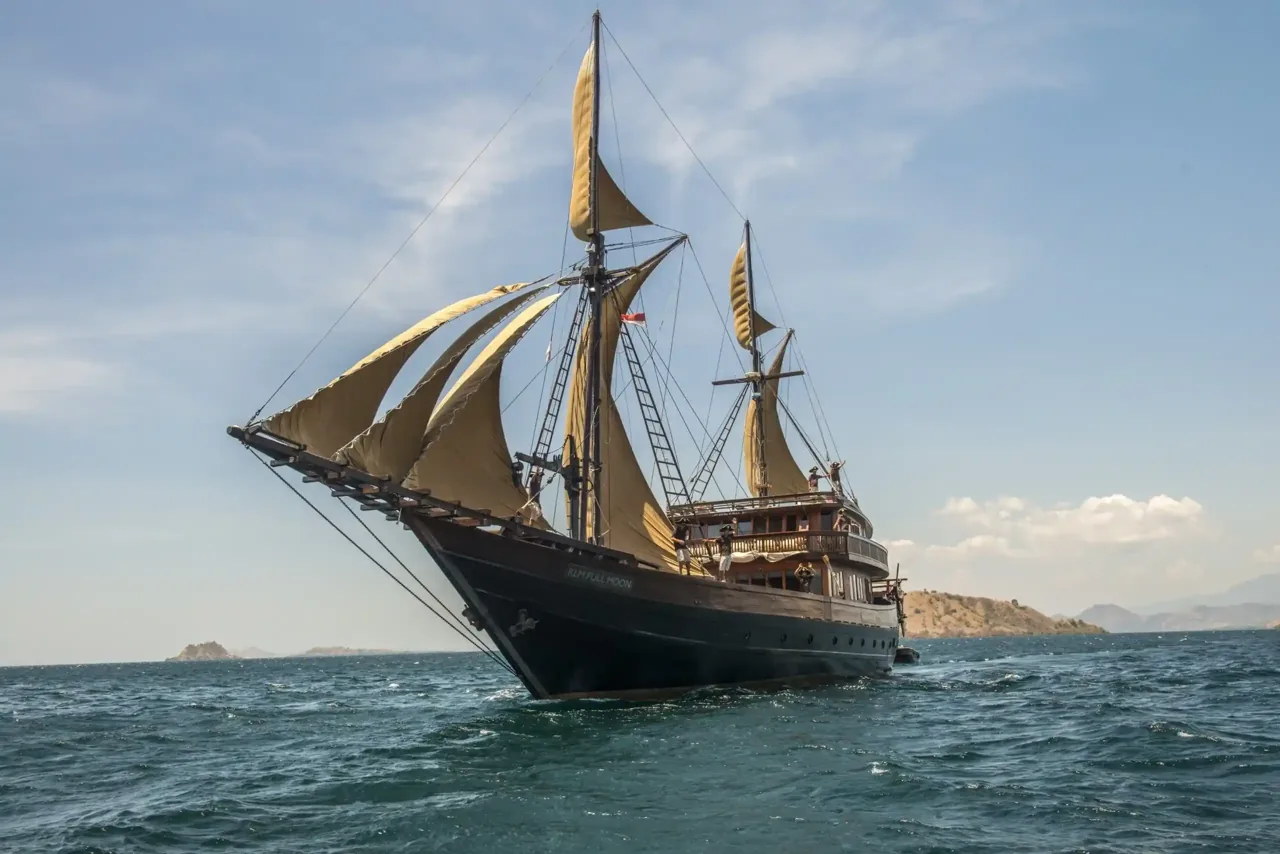
Private charter is priced per yacht, per night, from USD 6,400 to USD 35,000 depending on the vessel, with a 7-night minimum from Sorong. To make that concrete: seven nights on a ten-guest phinisi at the entry rate is USD 44,800 for the whole yacht, about USD 640 per guest per night, with crew, chef, all meals and dive equipment included. The yachts below are the ones we feature most often for Misool, one from each tier of the catalogue.
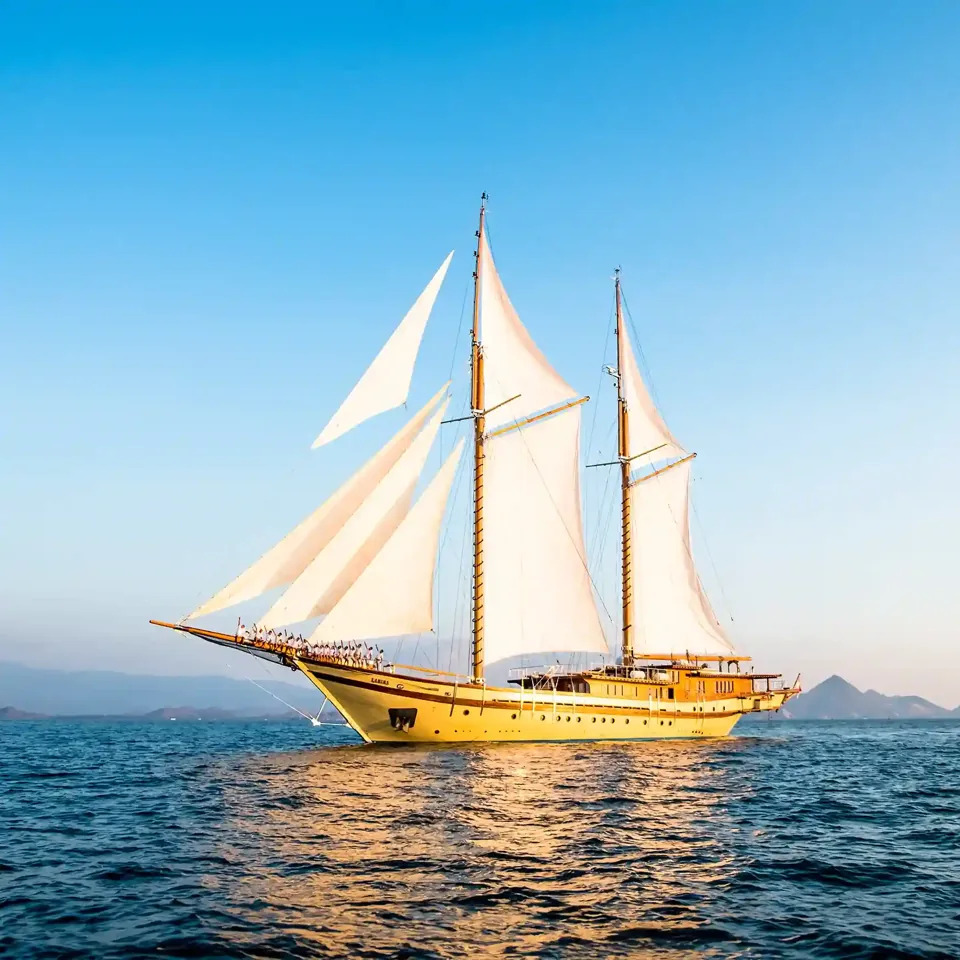
Lamima
65.2 m ketch, 7 cabins, 14 guests. The longest yacht in the catalogue, with the deck space to run a Misool week for a large family without anyone sharing a corner. From USD 27,000 per yacht, per night (+ 11% VAT), 7-night minimum. Superyacht tier, 50 m and above.
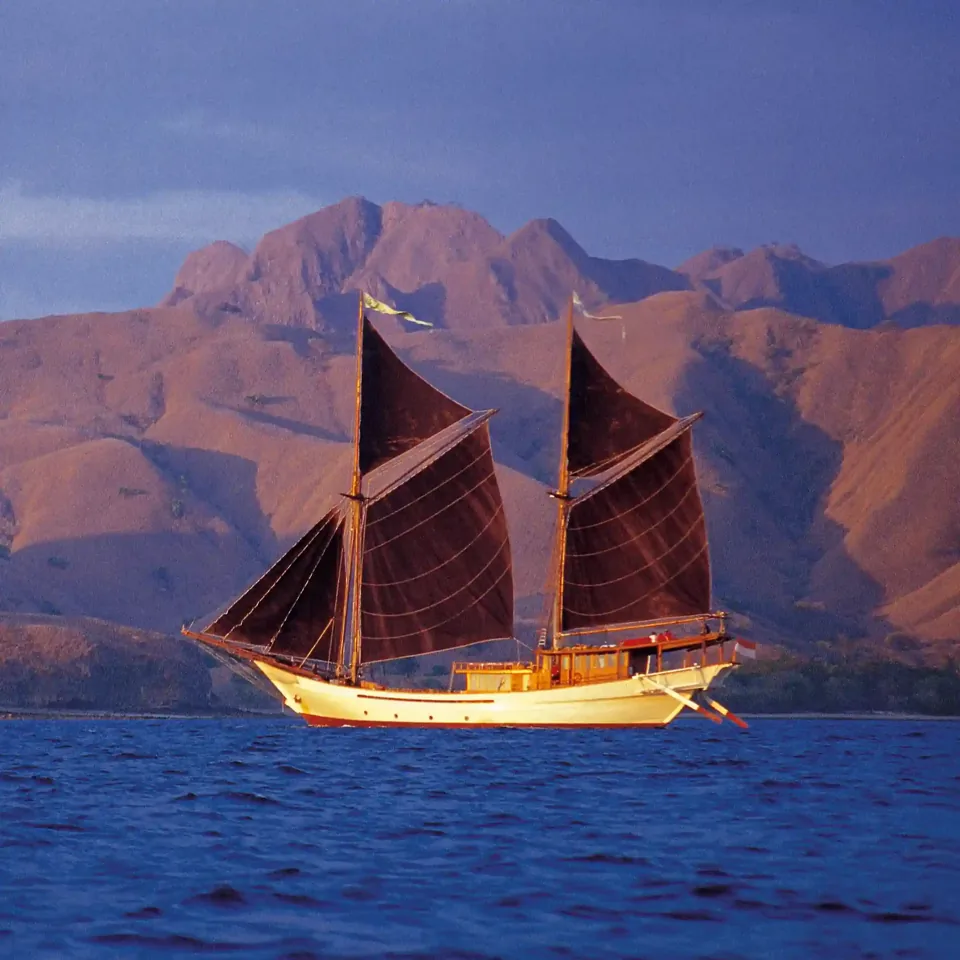
Silolona
Traditional gaff-rig phinisi, 5 cabins, 10 guests. A sailing phinisi for a party of up to ten. From USD 18,700 per yacht, per night (+ 11% VAT), 7-night minimum. Luxury phinisi tier.
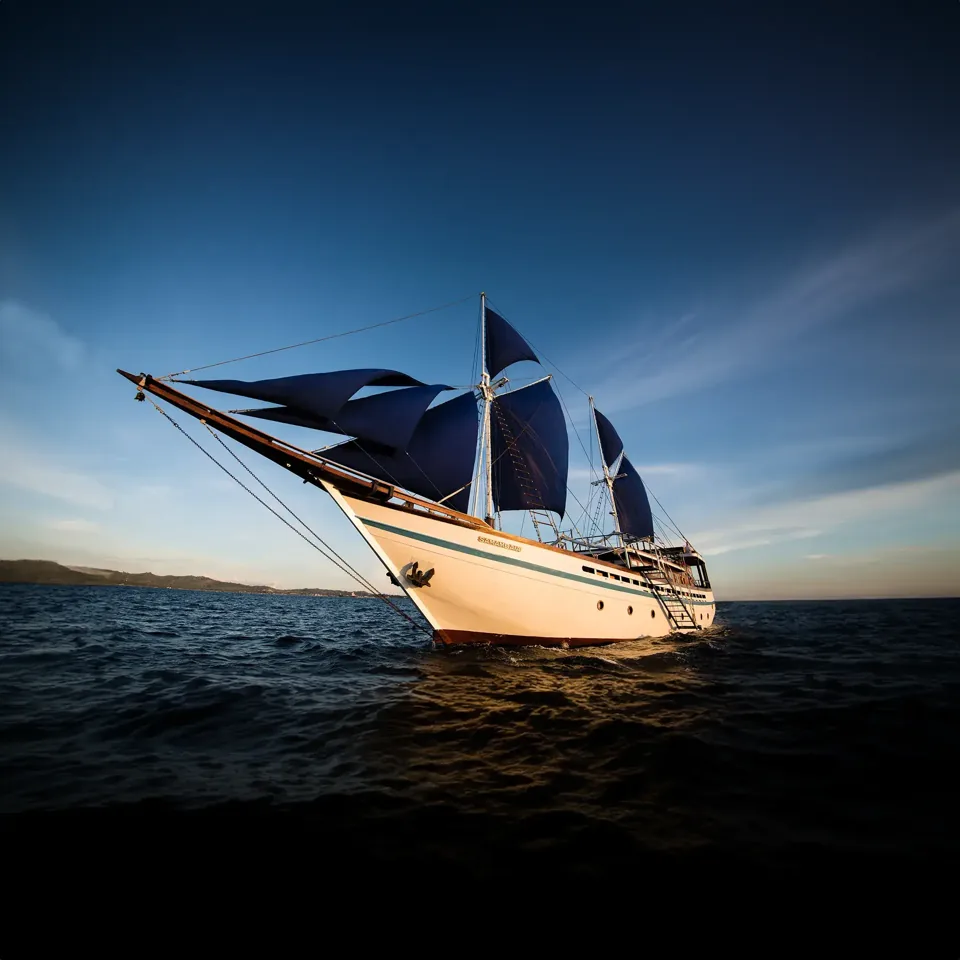
Samambaia
Traditional two-mast wooden phinisi schooner, 7 cabins, 14 guests. A fourteen-guest phinisi for a group built around Magic Mountain and Fiabacet. From USD 7,035 per yacht, per night (+ 11% VAT), 7-night minimum. Luxury phinisi tier.
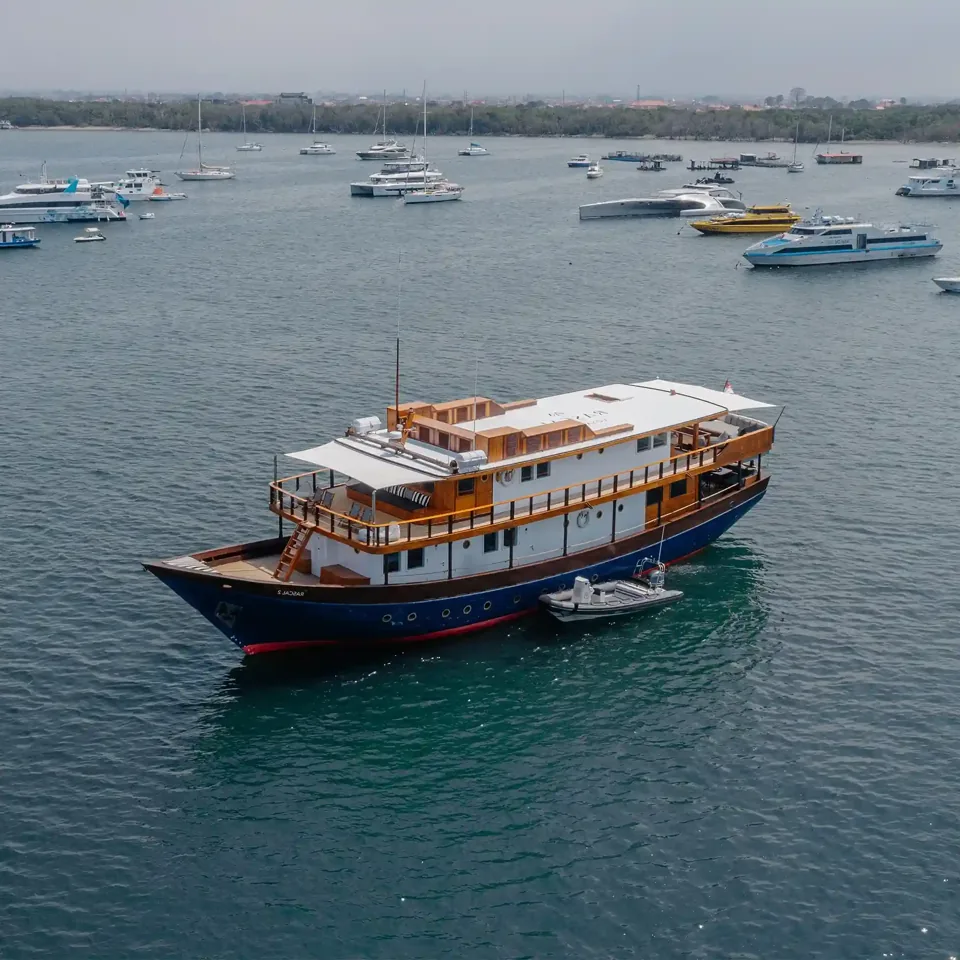
Rascal
30 m traditional phinisi yacht, 5 cabins, 10 guests. The intimate option for a couple, a family or a small group of friends who want the whole boat without empty cabins. From USD 12,000 per yacht, per night (+ 11% VAT), 7-night minimum. Boutique phinisi tier, under 35 m.
Other Raja Ampat names such as Prana by Atzaro, Amandira, Dewi Nusantara and Sequoia can be requested through the desk when they are open for your dates. For shared-cabin departures that call at Misool, see Misool and Raja Ampat liveaboard itineraries.
Costs and permits in one paragraph
Budget three lines. The charter itself, per yacht per night with a 7-night minimum, is the largest, and it covers the vessel, crew, chef, all meals, standard dive and snorkel gear, tenders and the Sorong airport transfer. Flights to Sorong are the second line and are yours to arrange, or ours on request. The third is the Raja Ampat conservation card, a government fee charged per person: the most consistently reported 2026 figure is IDR 700,000, about USD 40, for foreign visitors, valid for twelve months, although some 2026 sources list a higher tariff, so confirm the current amount with the Raja Ampat Marine Park Authority before payment. Premium wines, crew gratuities and dive courses sit outside the rate when requested. The arithmetic for every tier is in what a Misool luxury trip costs, and the fee detail in our permit and fee guide.
Misool, Raja Ampat: frequently asked questions
How long does it take to sail from Sorong to Misool?
Central Misool is 90 to 110 nautical miles from Sorong. At a phinisi’s cruising speed of 8 to 10 knots that is about 10 to 14 hours underway, so the passage is normally sailed overnight. Exact time depends on the anchorage you are heading for, with Balbulol and the Yellu side differing by 10 to 20 nautical miles, and on current and weather.
Can you take a speedboat directly from Sorong to Misool?
Speedboat transfers exist on some itineraries, but the crossing is long, open and weather-dependent, and public services vary. A private yacht that sails overnight turns the same distance into a night’s sleep and arrives with the tender, crew and dive gear already on board.
How do you get to Misool from Jakarta?
Fly Jakarta to Sorong with Garuda Indonesia or Batik Air, a scheduled 6 to 8 hours depending on timing and stops. A car meets you at the airport for the short run to the harbor, where the yacht’s tender takes you aboard. Land in the morning and you sail the same evening, waking in Misool the next day.
Are there direct flights from Bali or Singapore to Sorong in 2026?
From Bali, yes. Garuda Indonesia is scheduled to resume Denpasar to Sorong on 25 October 2026 and operate through March 2027, about 4 hours. From Singapore there is no direct service; connect through Jakarta, Bali or Makassar. Carrier details change, so confirm the exact airline and dates in the booking system before you buy.
Can travelers visit Yellu, Fafanlap and Harapan Jaya villages?
Yes, by tender from the yacht, when the crew has arranged the visit with the village in advance. Expect a walk through the village with a local host. Dress modestly, ask before photographing people, and expect the visit to be a conversation rather than a performance. The crew handles the customary courtesies.
When is the best time to see mantas at Magic Mountain?
Mantas are present year-round, but the strongest cleaning-station activity at Magic Mountain runs December through March, with January and February a particularly strong choice. Those months also bring the calmest crossings and the best visibility, typically 25 to 35 m. Water temperature is 27 to 30 C, so most divers are comfortable in a thin suit.
Tell us your dates and group size and the charter desk will come back with the yachts open for Misool and a written quote. Message the desk on WhatsApp or email [email protected].