Where Misool Jellyfish Lake is and how the yacht positions
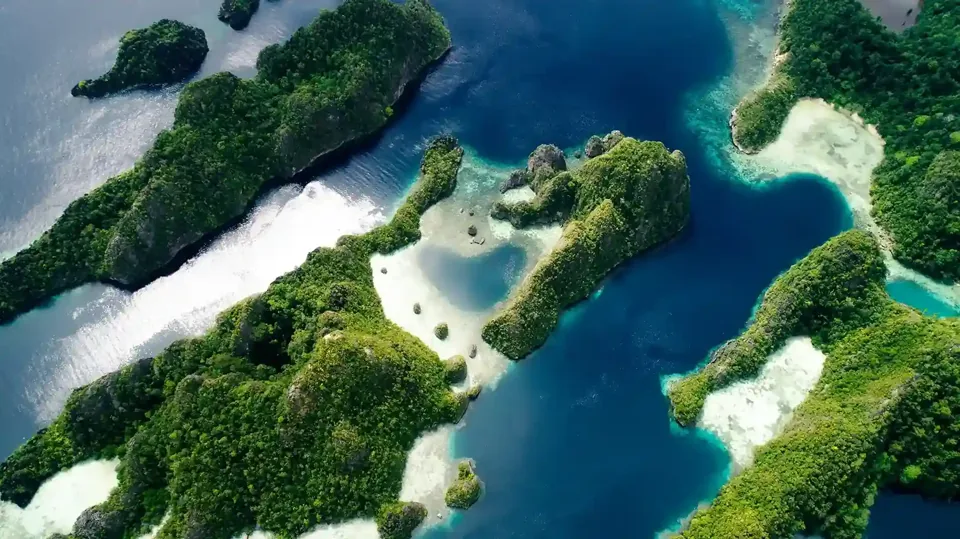
Lenmakana sits inside one of the limestone islands of the Misool group, in the southern part of Raja Ampat. From the sea you see nothing but a wall of karst and forest. The lake is behind it, cut off from the open water by rock, and its jellyfish are largely stingless. Our guide to Misool in Raja Ampat explains where the island group sits relative to the Dampier Strait and Wayag.
There is no jetty, no sign and no scheduled boat. Every visit starts from a vessel.
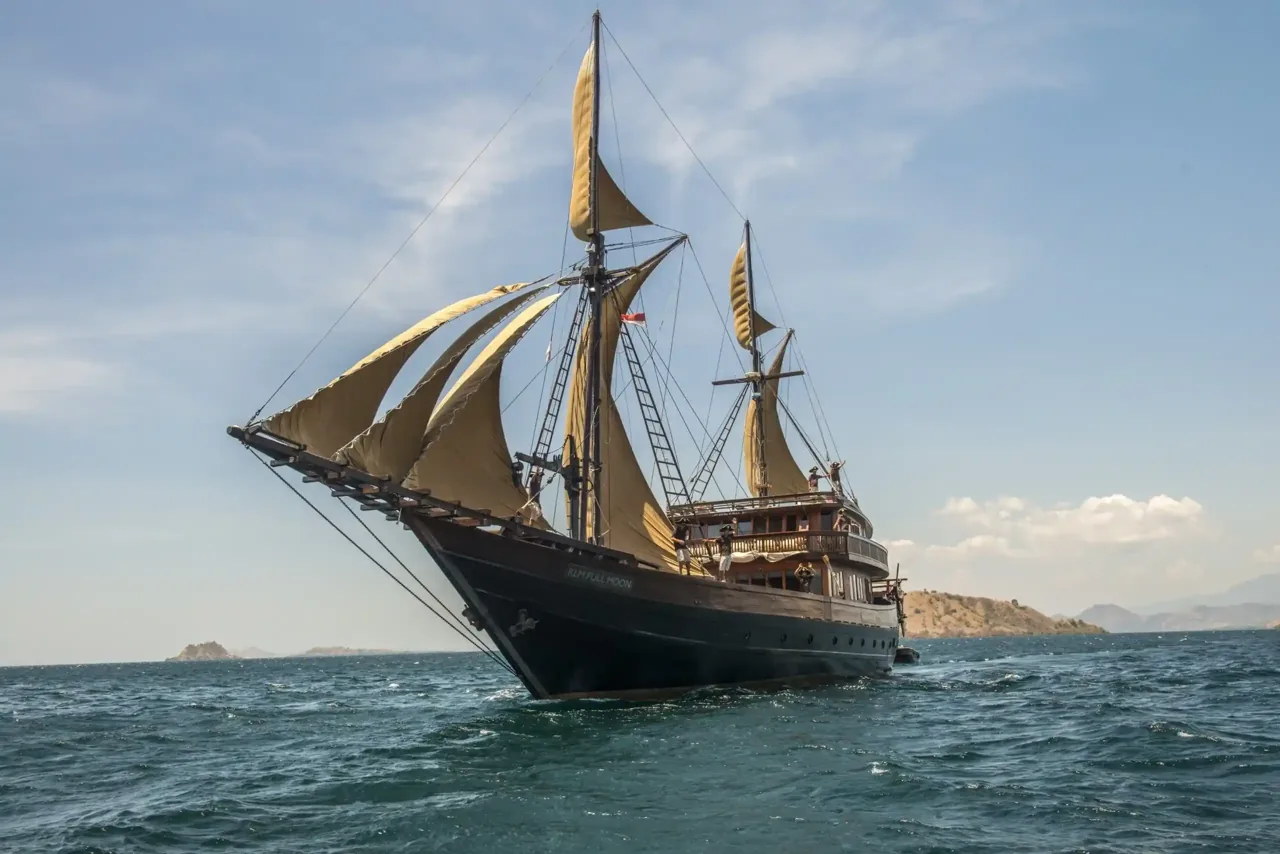
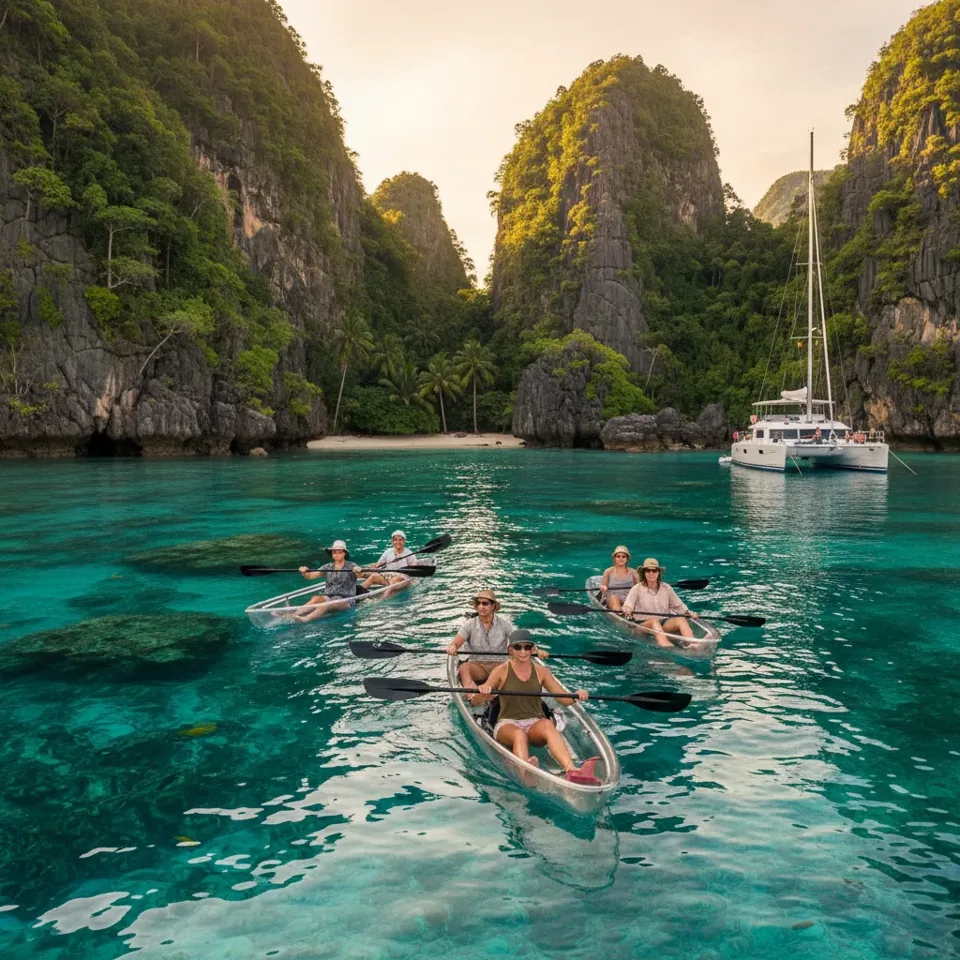
Your yacht does not go to the lake. It stops in deep water or on a designated mooring buoy nearby, because the Misool Marine Reserve prohibits anchoring on reef, and the tender takes you the last stretch to a small landing on the shore. The crew times this around the rest of the day, often pairing it with a dive or snorkel at Fiabacet and a beach stop at Kalig, both close enough that nobody spends the afternoon in transit.
On a private charter the yacht is the only transport, the only accommodation and the only way in. That is the practical answer to how to get there: fly to Sorong, board, sail roughly 90–110 nautical miles south overnight, and wake up among the islands. The lake is then a tender ride away. If you are still working out the route, how to get to Misool covers the flights and the crossing.
Access rules and visitor management
Lenmakana lies within the Misool Marine Reserve, an area of roughly 1,200 square kilometers that includes two no-take zones. Inside it, fishing, collecting marine life and damaging coral are prohibited, boats use mooring buoys rather than anchors, and motorized water toys such as jet skis are not allowed. A local ranger unit of about 18 people patrols from three stations with support from the Marine Police. The same rules that protect the reefs apply at the lake.
Access to the lake is managed locally. Visitor numbers and the time each group spends in the water may be limited, and access can be paused without public notice. Your crew confirms the current status before the tender leaves, which is the practical way to know whether Lenmakana is open on a given day.
What you need on board is the Raja Ampat conservation card, arranged at embarkation in Sorong and separate from the charter rate. Local landing arrangements at the lake, where they apply, are handled by the crew. Details on the card and other fees are in Misool and Raja Ampat permit fees, and the reserve’s full rule set is in Misool Marine Reserve explained.
The climb and what to wear
The walk from the shore to the lake is short but not gentle. The path crosses sharp, weathered limestone and in places you use your hands. It is a scramble rather than a hike, and the surface punishes bare feet and flip-flops.
Wear closed shoes with grip. Reef shoes or trail sandals with a toe cap work; soft-soled water shoes usually do not.
A rash guard or thin long-sleeved top protects your arms on the rock and in the water, and it replaces sunscreen, which you must not wear in the lake. Leave fins, large camera housings and anything heavy on the tender. The crew carries masks and snorkels in a dry bag and hands them out at the top.
Go in the morning or the late afternoon if you can. The karst holds heat, and the climb in full midday sun is harder than it needs to be. Take water, drink it on the shore, and carry the empty bottle out again. Nothing is left on the island.
Swimming etiquette inside Lenmakana
The jellyfish are the reason the lake exists as a destination, and they are fragile. The rules are simple and the crew will brief you before you enter the water.
| Do | Do not |
|---|---|
| Snorkel at the surface only | Scuba dive or free dive below the surface |
| Swim slowly with a gentle flutter or breaststroke | Use fins, which tear the jellyfish bells |
| Rinse off before the climb and enter the water clean | Wear sunscreen, insect repellent or lotion of any kind |
| Let the jellyfish drift past you | Touch, lift or hold them, even for a photo |
| Follow the group size and time limits set by the guide | Linger after the guide calls time |
Surface-only is the rule that matters most. Scuba and free diving below the surface are not permitted, and the jellyfish live in the upper water where you swim. A mask, a snorkel and a slow pace are all you need.
No sunscreen and no repellent is the second rule. Both products pollute a closed body of water with no tide to flush it. Cover up with fabric instead. If you have applied anything that morning, tell the guide and rinse thoroughly in the sea before the climb.
No touching is the third. The jellyfish pulse against your skin on their own and you will feel a faint tingle at most. Cupping one in your hands damages it. Keep your hands at your sides, keep your feet still, and the animals come to you.
Best light, tide and photography
The jellyfish tend to gather where the sun reaches the water, so in bright, high light the concentrations are densest. Under cloud they disperse. The crew reads the sky before committing the tender; a clear morning or early afternoon is the usual target, and a visit under heavy cloud can be moved to another day in the itinerary.
Tide matters less here than at the reefs, because the lake is landlocked and has no current. It matters for the landing. The tender needs enough water at the shore to put you on rock rather than coral, so the crew times the approach around the day’s tide table. This is why Lenmakana is slotted into the day by the dive team rather than booked at a fixed hour.
For photography, a compact camera or phone in a small housing is enough. Shoot from the surface looking down into the backlit bells, or half-submerged at the surface line with the karst behind. Keep strobes and video lights off; they are unnecessary in the shallow light and they disturb the animals.
Do not chase a shot by swimming into the thickest cluster. Wait, hold still, and let the jellyfish fill the frame. More technique for Misool’s water is in Misool underwater photography.
Nearby: Kalig beach and Fiabacet snorkeling
Lenmakana is rarely a day on its own. The same stretch of islands holds Kalig, a small white-sand beach used for a lunch stop or an afternoon on the sand, and Fiabacet, one of Misool’s signature reef sites. A typical sequence is a dawn dive or snorkel at Fiabacet, the lake late in the morning when the sun is high, and Kalig for lunch from the yacht’s galley brought ashore by tender.
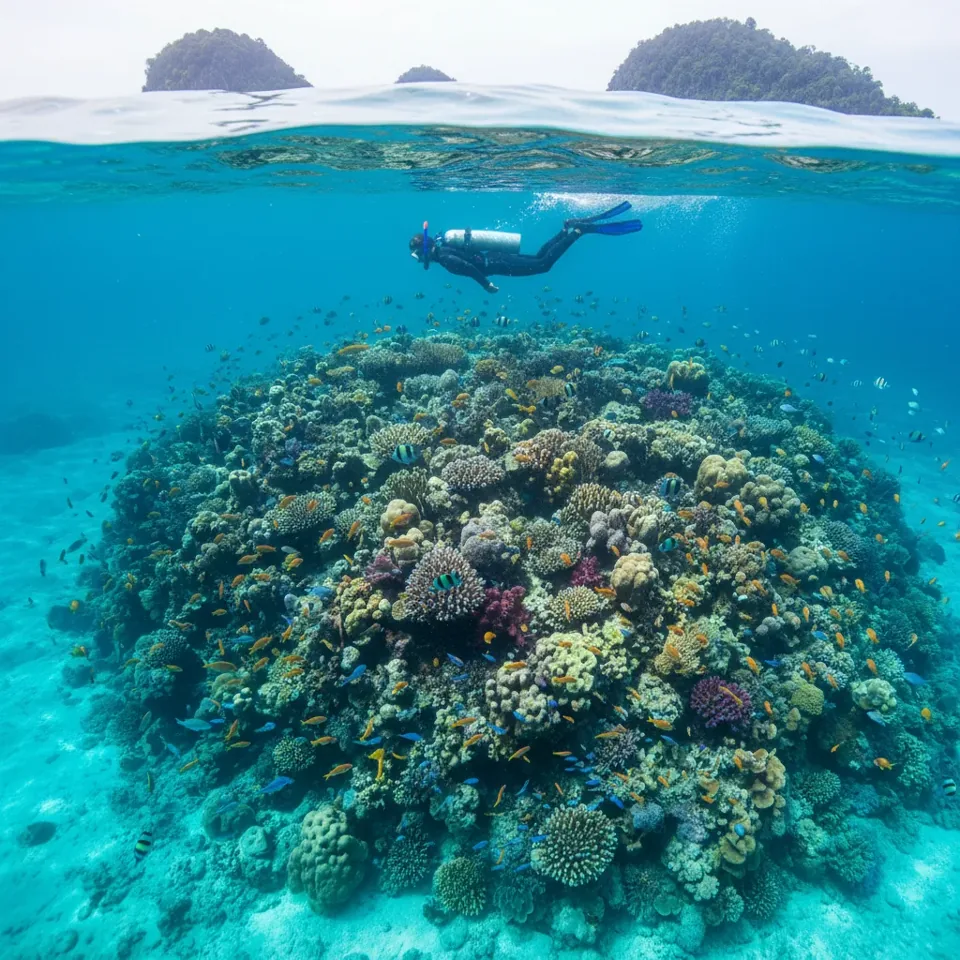
Fiabacet is a chain of pinnacles between about 8 and 35 meters, covered in sea fans and soft coral, with schooling snapper and sweetlips, pygmy seahorses on the fans and wobbegong sharks resting under the ledges. Current is usually moderate and depends on the tide, so snorkelers stay on the shallow tops with the tender tracking the group. Divers go deeper on the same site. Both groups see the same reef from different depths, which is what makes it work for a mixed family or a party with non-divers.
Kalig is the opposite: no fins, sand underfoot. The rules are the same as everywhere in the reserve. Use the landing area the crew points out, take everything back to the tender, and leave shells and coral where they are. For the wider set of lagoons, viewpoints and caves on the same coast, read Misool lagoons and Yapap, Wayil and Fiabacet.
Which itineraries include it: any Misool tour of seven nights that spends its middle days in the southern islands. On a private charter, the lake is a standing request rather than a fixed stop, and the crew places it on the day with the best sky. On a shared-cabin liveaboard it appears when the schedule and the group’s dive plan allow, so if it matters to you, say so before you book rather than on board. Water temperature in the October–April season runs about 26–30°C, varying by site and month, and is warm enough to swim in a rash guard without a wetsuit.
Plan it
The jellyfish lake is one afternoon inside a seven-night trip, and the quality of that afternoon depends on the vessel that brings you there: a tender that can land on rock, a crew with the local contact, and a schedule loose enough to wait for sun. Our Misool luxury tour builds the whole circuit around moments like this, with private charters priced per yacht, per night from USD 6,400, a 7-night minimum from Sorong and an October–April season. If you are choosing between a whole yacht and a cabin, cabin or private charter sets out the difference.
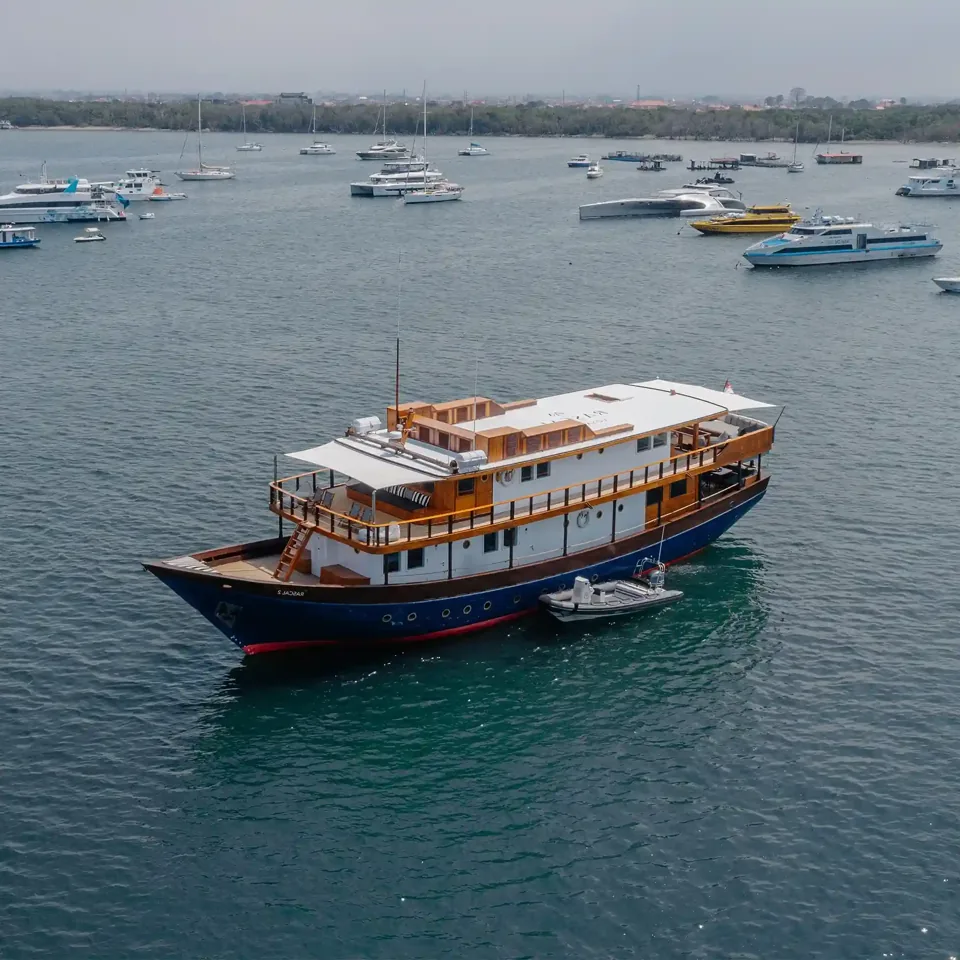
Rascal
30 m Traditional Phinisi Yacht, 5 cabins, 10 guests. A single-family yacht with a tender and a crew that treats Lenmakana as a weather call rather than a timetable entry. From USD 12,000 per yacht, per night (+ 11% VAT), 7-night minimum: USD 84,000 for the whole yacht over seven nights, about USD 1,200 per person per night for ten guests, before VAT. Boutique phinisi tier.
Misool jellyfish lake: questions we are asked
Is Lenmakana Jellyfish Lake open to visitors?
Access is managed locally and can be paused without public notice. Your crew checks the current status before the tender leaves, and the desk confirms the current status when you plan the itinerary. Treat it as a weather-and-permission stop, not a fixed one.
Can the jellyfish in Misool sting?
The lake’s Mastigias papua are described as largely stingless. Most swimmers feel nothing or a faint tingle where a bell brushes bare skin. People with sensitive skin or a history of reactions sometimes notice slight irritation, which a rash guard removes. The risk runs the other way: handling damages the animals, which is why touching is prohibited.
Can I scuba dive in the jellyfish lake?
No. Lenmakana is surface snorkeling only. Scuba and free diving below the surface are not permitted, to protect the jellyfish. Fins are also banned since they shred the bells. Dive gear stays on the yacht; the tender brings masks and snorkels in a dry bag for the climb.
What should I wear for the climb to the lake?
Closed shoes with grip, because the path is sharp limestone with roots and loose rock. A rash guard or thin long sleeves protects you on the rock and replaces sunscreen, which you must not wear in the water. Leave fins, heavy camera rigs and anything you would need to carry in both hands on the tender. Bring water and carry the bottle out.
Which Misool itineraries include the jellyfish lake?
Any seven-night Misool tour that spends its middle days in the southern islands can include it, usually alongside Fiabacet and Kalig. On a private charter it is a standing request that the crew places on the day with the clearest sky. On a shared liveaboard it depends on the group schedule, so ask before booking. The season is October–April, with November–March the most reliable.
Can I fly a drone over the lake?
Do not assume so. The published reserve rules do not state a visitor drone policy. Ask the crew to obtain permission from the reserve managers before you launch anything, and accept a no. Rangers reportedly use drones for patrol, which is not a precedent for guests. Handheld photos from the surface need no permission.
Tell us your dates and whether the jellyfish lake is a must, and the charter desk will place it in a seven-night Misool itinerary with the right yacht and the right crew. WhatsApp +62 811-3941-4563 or email [email protected].