Misool Marine Reserve at a glance
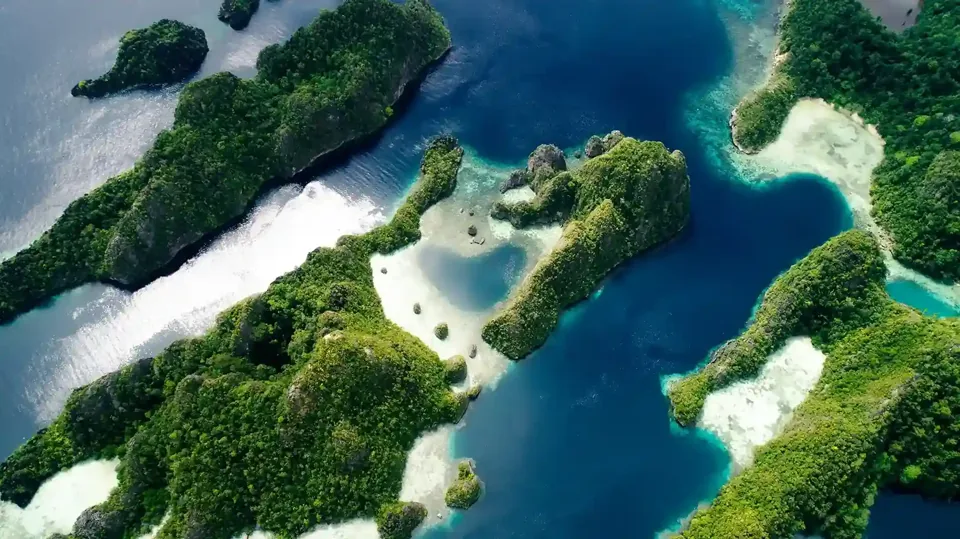
The reserve lies in the waters around Misool, the southernmost of Raja Ampat’s four main islands. Published figures put it at about 300,000 acres, or 1,214–1,220 km², which most sources round to 1,200 km². That area is not one continuous closed zone. It is two no-take zones, where all extraction is banned, linked by a blue-water corridor where only restricted fishing gear is permitted. For the island itself, its distance from Sorong and how it compares with the Dampier Strait and Wayag, read our Misool, Raja Ampat guide.
One distinction matters when you read maps or fee notices. The Misool Marine Reserve is the roughly 1,220 km² area patrolled by the local ranger unit. The Misool Islands Marine Protected Area is the wider government-managed zone, reported at about 3,450.8 km², which wraps around the whole island group. The reserve sits within the wider MPA area, so a yacht entering the lagoons is subject to both sets of rules at once.
For guests the practical effect is simple. The lagoon anchorages, the karst channels and the cleaning stations that make a Misool itinerary worth seven nights lie largely inside or beside the reserve, which is why the rules below are not a footnote. They decide where the yacht moors, what the tender does, and what comes back on board.
Which Misool areas are designated no-take zones
The reserve’s two no-take zones cover two reef systems in Misool’s waters. The corridor between them is blue water, designated restricted-gear rather than no-take, where only permitted gear may be used. Your captain carries the zone boundaries.
What you need to know as a guest is not the coordinates but the behavior they require. Inside a no-take zone, the yacht does not drop an anchor on reef, the tender does not trail a line, and nobody picks up a shell. In the corridor, the same conduct applies to a visiting yacht in practice, because a charter vessel has no fishing permit and no reason to test the distinction.
Misool marine reserve rules: what is prohibited
The published rules read as a list of things that are not done. Fishing of any kind is prohibited in the no-take zones, including catch-and-release and spearfishing. Netting, reef bombing, cyanide fishing, shark finning and the collection of turtle eggs are banned outright. Visitors may not collect marine life or other natural products, damage coral, or anchor on reef, and must not use destructive practices of any kind.
Under the broader Misool protected-area rules, jet skis and other motorized water vehicles are also prohibited. Boats are expected to use designated mooring buoys. Transit by boat through the no-take zones may be allowed, but fishing while transiting is not.
| Activity | Status inside the no-take zones |
|---|---|
| Fishing, including catch-and-release and spearfishing | Prohibited |
| Netting, reef bombing, cyanide fishing, shark finning | Prohibited |
| Collecting shells, coral, turtle eggs or any natural product | Prohibited |
| Anchoring on reef | Prohibited; use designated mooring buoys |
| Jet skis and other motorized water vehicles | Prohibited under the wider Misool protected-area rules |
| Boat transit without fishing | May be allowed; confirm with your captain |
| Traditional free-diving mollusc harvest under sasi | Limited exception for local communities only |
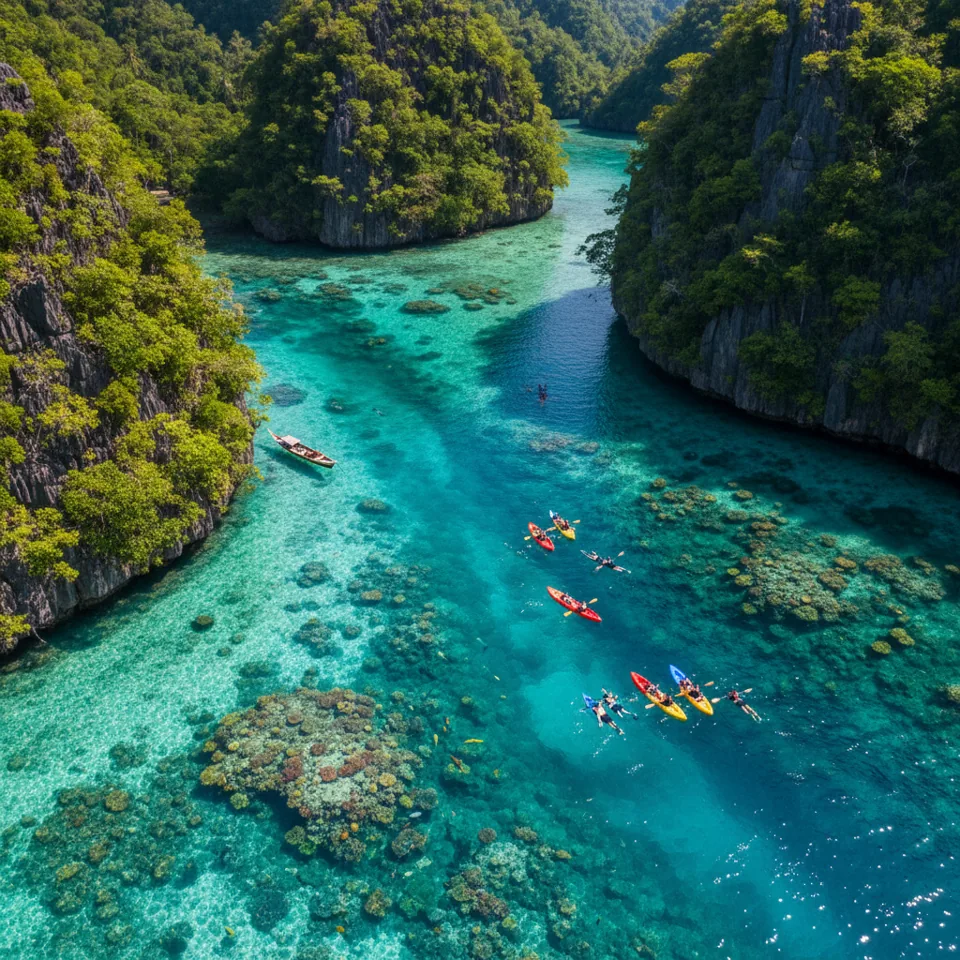
| Diving, snorkeling, kayaking, tender excursions | Permitted with a conservation card and a guide |
The sasi exception
The one stated exception is a limited, traditional free-diving mollusc harvest carried out under sasi, the customary system of temporary closures and openings that Raja Ampat communities have used for generations. It applies to local people, on local terms, and not to visitors. If your route coincides with a sasi opening, the captain will know and the itinerary will respect it.
Who patrols, and why the reef came back
Enforcement and monitoring are carried out continuously by the Misool Ranger Patrol, a local unit of roughly 18 rangers operating from three stations with five patrol boats, with support from Indonesia’s Marine Police. The rangers are local, drawn from the surrounding communities.
One point is worth stating plainly. The rangers reportedly lack statutory enforcement authority of their own. Formal legal authority rests with the government’s BLUD marine-management body for the MPA. In practice the patrol monitors and reports to the state body.
For a visiting yacht the distinction is academic; a ranger boat alongside is treated exactly as a government inspection would be.
Published accounts of the reserve report gains in fish biomass and regular manta sightings since the no-take zones were established. We do not quote the percentages here, because the published baselines and survey methods differ between reports. The mechanism is well understood: when nothing is removed from a reef for long enough, the large fish return, and the mantas that feed and clean on those reefs follow.
Magic Mountain, a seamount of 7–40 m inside the Misool area, is now one of the better-known reef and oceanic manta cleaning stations in Raja Ampat. The strongest period is generally December–March, with January–February a particularly reliable window; see when the Misool manta season peaks for month-by-month detail.
How a yacht operates inside the reserve
A private charter or luxury liveaboard enters Misool as a guest of the reserve, and the good vessels behave accordingly. The practical routine has four parts.
Moorings, not anchors
Designated mooring buoys are used wherever they exist, and the captain will not drop an anchor on reef to save a few minutes. Where no buoy is available, the vessel anchors in sand or deep water well clear of coral, and the tender ferries guests to the site. This is the most visible rule.
Briefings
Every guest receives a briefing before the first water entry: no touching, no standing on coral, no feeding, no chasing mantas, no collecting. Dive guides hold the group at cleaning stations so that animals keep their routine. These are reserve rules, and on a well-run yacht they are also the house rules, so you will hear them more than once.
Waste
Nothing goes over the side inside the reserve. Rubbish is carried out of the reserve. Grey-water and sewage handling follows the vessel’s own systems, and the captain will tell you how yours works if you ask. Single-use plastic is minimized on board for the same reason: there is nowhere in Misool to put it.
Drones
The published reserve rules do not clearly state a standalone visitor-drone policy. One source reports ranger use of radar and drone surveillance, but that does not establish permission for guests to fly. Treat this as unverified. Before launching a drone anywhere in the reserve, obtain current permission through the reserve’s managers and your captain, and expect the answer to vary by site and season.
Gag Island nickel: what is and is not substantiated
In June 2025, environmental groups and the public protested nickel mining in Raja Ampat, citing deforestation, sedimentation, pollution and risks to the archipelago’s marine biodiversity. Greenpeace identified 16 historical or current licenses, including sites inside the UNESCO Global Geopark and on legally protected small islands.
On 10 June 2025 the government revoked the nickel-mining licenses of PT Anugerah Surya Pratama, PT Kawei Sejahtera Mining, PT Mulia Raymond Perkasa and PT Nurham, citing environmental and forest-use-permit issues. The permit of PT Gag Nikel, a subsidiary of the state-owned miner Aneka Tambang, was not revoked. Its operations were halted in June 2025 for verification, then resumed in September 2025, with the government stating that the mine met environmental criteria and lay outside the geopark. Critics disputed those assurances.
In 2026 Gag Nikel was still operating. Greenpeace reported continuing environmental risks, including sedimentation and inadequate biodiversity safeguards, and said three further nickel-license applications were being processed. The government denied issuing new permits and, by October 2026, said it was halting new forest-area approvals in Raja Ampat.
What is not substantiated is the geography. Claims that Gag Island lies outside the geopark conflict with reporting that mining-related licenses and affected islands overlap the geopark area, and we have not seen the official UNESCO boundary map reconciled with the government’s statement.
Gag Island is a separate island in the northwest of the archipelago; it is not inside the Misool Marine Reserve or the Misool Islands MPA. We have no evidence that mining has affected water quality in Misool. We also do not pretend the matter is closed.
UNESCO Global Geopark 2023 and Biosphere Reserve 2025
Raja Ampat became a UNESCO Global Geopark in 2023, recognized for its geological, ecological and cultural significance, and the designation remained in place in 2026. Separately, large parts of the archipelago were designated a UNESCO Biosphere Reserve in September 2025. The two labels are distinct: the geopark concerns landscape and heritage, the biosphere reserve concerns the balance between conservation and human use.
Neither designation changes the rules you follow in the water. The no-take zones, the mooring requirement and the conservation card predate both. What the designations do is raise the cost of getting it wrong, for operators and for the state alike, which is one reason the Gag Island question is being argued in public rather than settled quietly.
Responsible-travel checklist for guests
Misool conservation tourism is not complicated. It is a short list, kept every day of the trip.
- Carry your Raja Ampat conservation card and keep the receipt on board; details are on Misool and Raja Ampat permit fees.
- Do not fish, not even catch-and-release, and do not ask the crew to.
- Take nothing from the water or the shore: no shells, no coral, no sand.
- Stay off the reef. Control your buoyancy, keep fins up, and do not stand in the shallows.
- Keep your distance from mantas and turtles and let the guide position the group.
- Use the mooring the captain chooses and do not pressure the crew to anchor closer.
- Leave no rubbish ashore and bring back anything you find.
- Respect sasi closures and any temporary ranger closure without argument.
- Ask before flying a drone, and accept no as an answer.
- Use an authorized guide for caves, viewpoints and village visits.
Most of this is handled for you on a well-run vessel. The guest’s job is to not undo it. Read the Misool dive sites guide to see how the reserve’s zones shape a week of diving, and Misool lagoons for the anchorages above water.
Plan it
The reserve rewards a slow itinerary. Seven nights lets a yacht mooring-hop between the no-take zones, give the cleaning stations a morning each and still leave time for the lagoons. A private Misool luxury cruise is priced per yacht, per night, from USD 6,400 to USD 35,000 depending on the vessel, with a 7-night minimum from Sorong and an October–April season.
Seven nights on a ten-guest phinisi at the entry rate is USD 44,800 for the whole yacht, about USD 640 per guest per night, with crew, chef, all meals and dive equipment included. Conservation cards, flights to Sorong and premium beverages sit outside the charter rate.
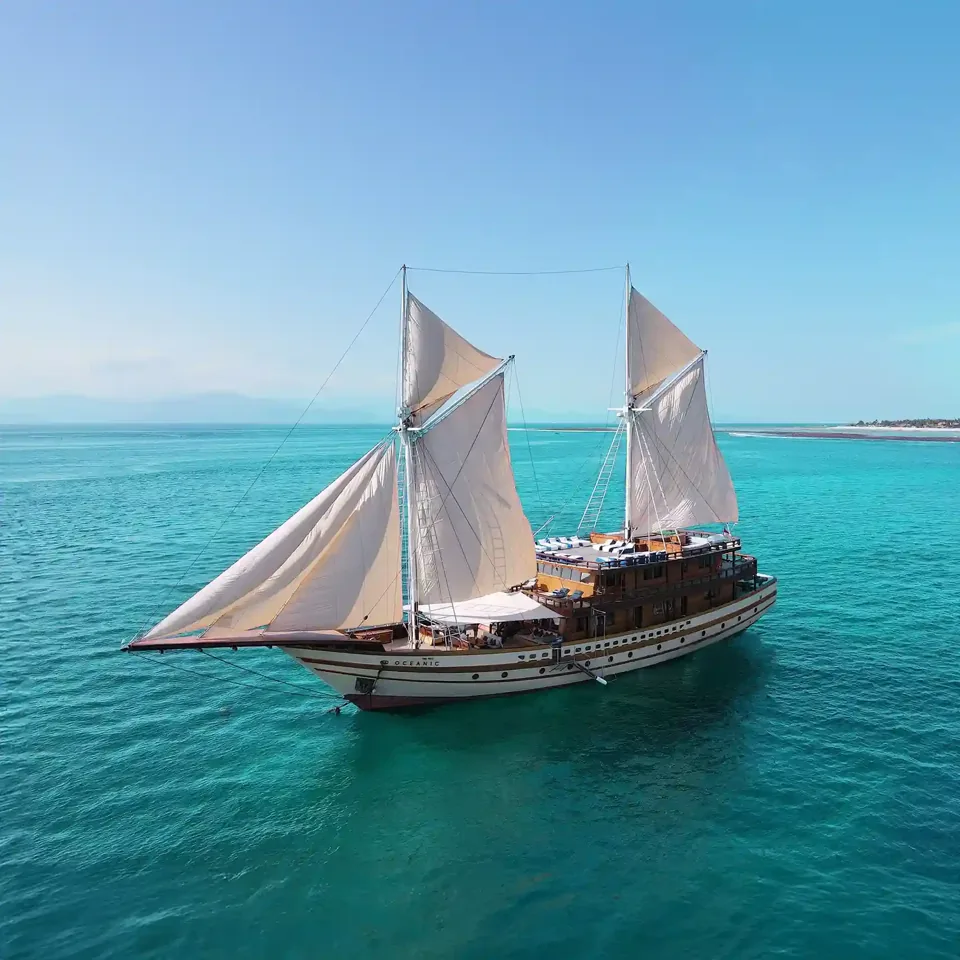
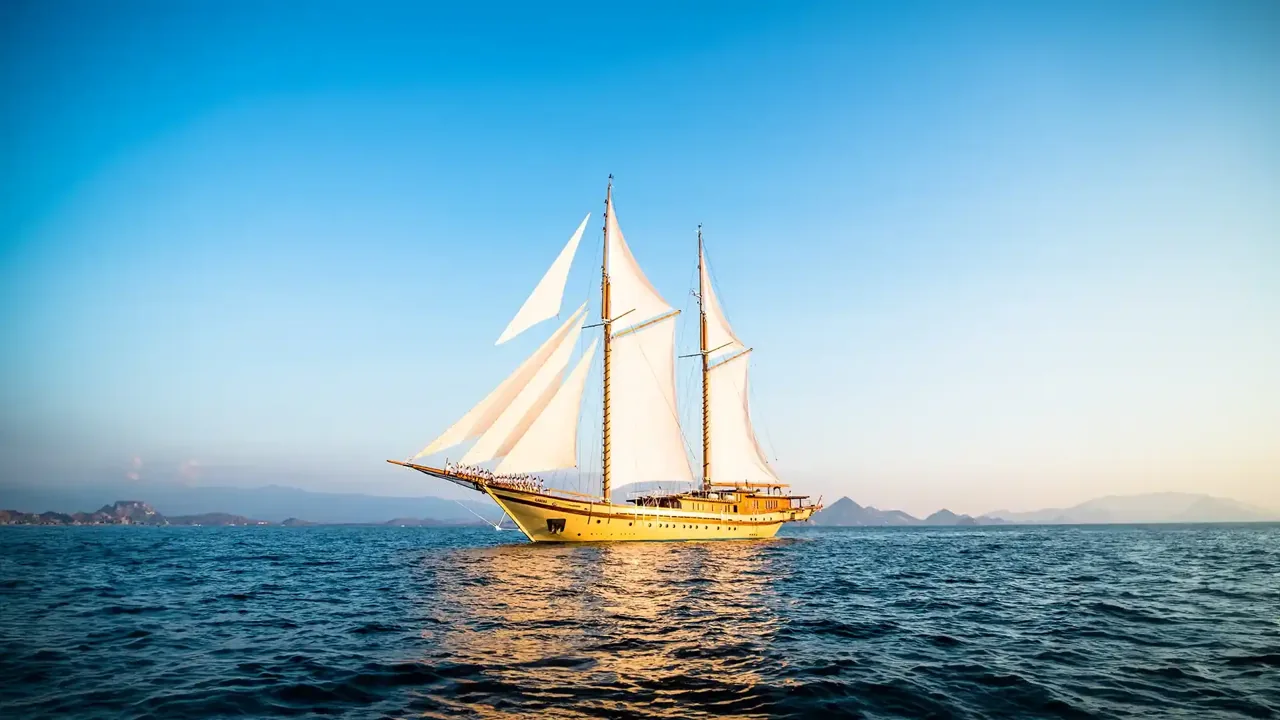
The Maj Oceanic
47 m wooden traditional ship, 6 cabins, 12 guests. From USD 14,000 per yacht, per night (+ 11% VAT), 7-night minimum. Phinisi tier.
Misool Marine Reserve: questions we are asked
What rules apply inside the Misool Marine Reserve no-take zone?
No fishing of any kind, including catch-and-release and spearfishing; no netting, bombing, cyanide or shark finning; no collecting marine life, shells, coral or turtle eggs; no anchoring on reef; no jet skis or other motorized water vehicles. Boats use designated moorings. Transit may be allowed; fishing in transit is not. The only exception is a limited traditional mollusc harvest under sasi for local communities.
Can visitors fish or anchor inside Misool no-take zones?
No. Fishing is prohibited in the no-take zones for everyone, visitors included, and that covers catch-and-release. Anchoring on reef is prohibited throughout the reserve. Yachts pick up designated mooring buoys or anchor in sand or deep water well clear of coral, and the tender carries guests to the dive or snorkel site.
How big is the Misool Marine Reserve?
About 300,000 acres, or 1,214–1,220 km², usually rounded to 1,200 km². It consists of two no-take zones joined by a restricted-gear blue-water corridor. Do not confuse it with the wider Misool Islands Marine Protected Area, the government-managed zone of about 3,450.8 km² that surrounds the whole island group.
Who enforces the rules?
The Misool Ranger Patrol, a local unit of about 18 rangers working from three stations with five patrol boats, supported by Indonesia’s Marine Police. The rangers reportedly lack statutory enforcement authority of their own; legal authority rests with the government’s BLUD marine-management body. For a visiting yacht the practical result is the same: the patrol is treated as an official inspection.
Can I fly a drone in the reserve?
Unverified. The published rules do not state a standalone visitor-drone policy, and reports of ranger drone surveillance do not establish permission for guests. Ask the reserve’s managers through your captain before launching, and expect the answer to depend on the site, the season and whether a ranger station is nearby.
Does the Gag Island nickel mine affect Misool?
Not that we can substantiate. Gag Island lies in the northwest of Raja Ampat, outside the Misool reserve and the Misool MPA. PT Gag Nikel kept its license in June 2025 and was operating in 2026 while four other licenses were revoked. Whether the mine sits outside the UNESCO geopark boundary remains disputed, and we have no evidence of any effect on Misool’s water.
Tell us your dates and group size and the charter desk will build a Misool itinerary that stays inside the reserve’s rules without you having to think about them. WhatsApp +62 811-3941-4563 or email [email protected].